Global Textile Policy Dialogues
Driving action for a sustainable and circular textile sector
Alongside the sixth session of the United Nations Environment Assembly (UNEA-6) in February 2024, governments recognised the urgent need for a policy coordination mechanism to build coherence in the policy response to address the adverse effects of the textile value chain on nature, people and economies. To do so, governments called for a global policy dialogue on textiles.
Mustafa Tuzcu, Türkiye’s Deputy Minister of Trade, called for UNEP to “bring and convene a wide array of governments in an inclusive policy dialogue to facilitate the transition towards a climate neutral, resource efficient and circular textile sector”.
“A global policy dialogue allows for more international coordination for policy implementation and to share experience and knowledge on different policy initiatives” – Afke van Rijn, Vice Minister for the Environment and International Affairs at the Ministry of Infrastructure and Water Management in the Netherlands.
At UNEA-6, governments agreed that the dialogue series should be government-led, inclusive and address various aspects of circularity in textiles, including:
Shifting consumption patterns
Addressing production pollution
Discussing the role of trade in promoting textile circularity
“We need to start thinking collectively about the issue of textile waste, and France is ready to get involved.” – H.E. Arnaud Suquet, France’s Ambassador to Kenya and UNEP Permanent Representative.
“Not only are we interested to learn from the success stories of other countries, we also want to learn from their failures” – Lydia Essuah, Director of Policy, Planning, Monitoring and Evaluation at the Ministry of Environment, Science, Technology and Innovation of Ghana.
The priorities of the Global Textile Policy Dialogues in 2026 and beyond were co-defined through a series of online consultation meetings hosted by UNEP in November 2025 and are captured in this Roadmap. The roadmap presents the outline of the purpose, approach and priority activities of the UNEP-facilitated Global Textile Policy Dialogues. It is a living text that will be updated as the work evolves and as Member States involved in the Dialogues wish to change it.
Policy podcast with global leaders
“Transforming Textiles: The Policy podcast with global leaders” sheds light on national policy interventions, their impacts and key learnings. It aims to amplify textile policy efforts at national level, and identify what can accelerate impact by having a more coordinated approach at global level.
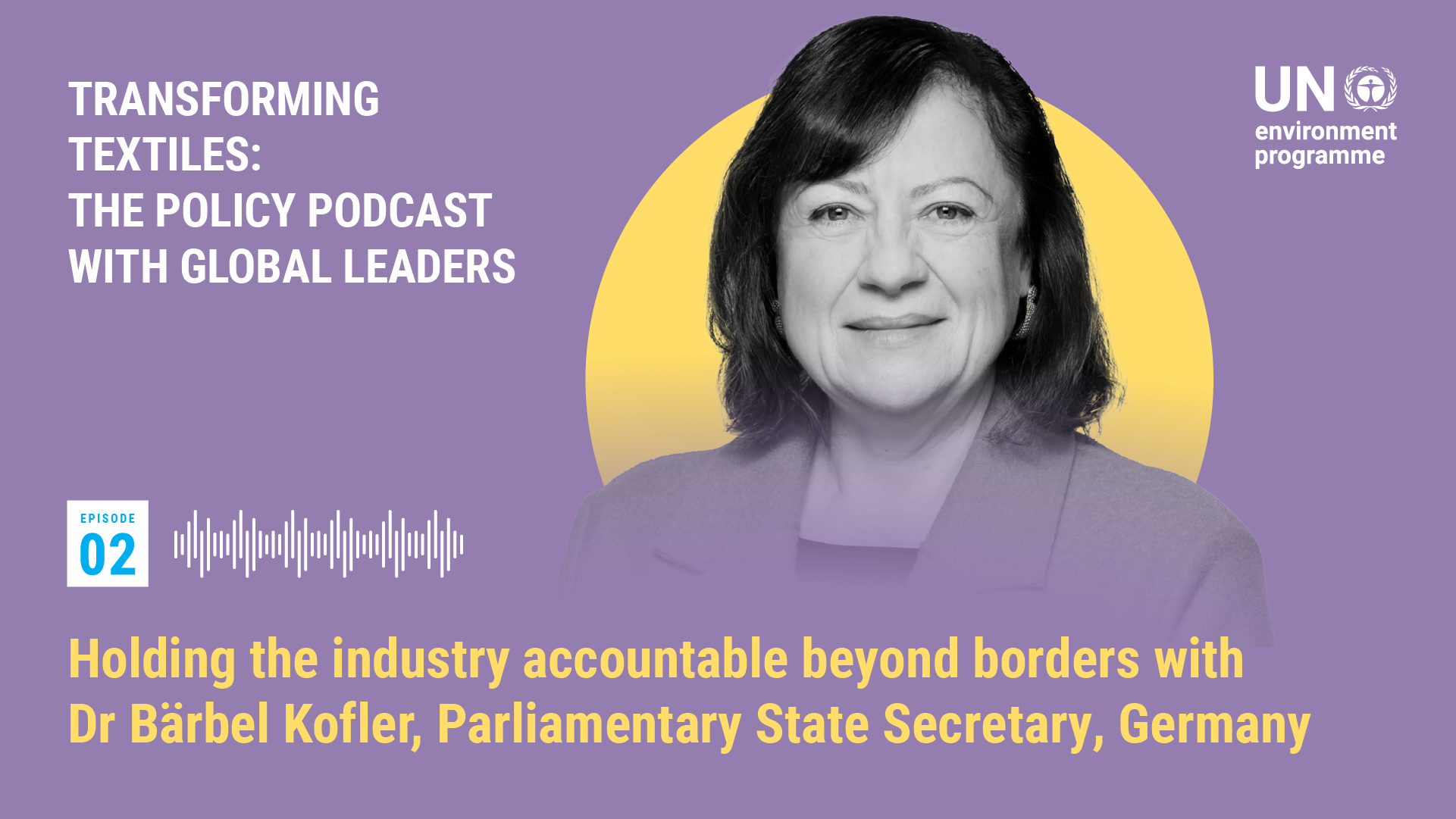
In this episode of ‘Transforming Textiles: The Policy Podcast with Global Leaders’, UNEP is joined by Dr Bärbel Kofler, Germany’s Parliamentary State Secretary to the Federal Minister for Economic Cooperation and Development, to talk about advancing a just, fair and more sustainable textile value chain beyond national borders.
Germany is one of the largest markets for fashion and footwear in the world, and generates over one million tons of used textiles every year. Yet, like other Global North nations, it externalises many of the environmental and social costs associated with this consumption.
We explore how Germany is holding the industry to account on the human rights and environmental impacts of their global operations, why she wants to see ambition levels maintained in the EU, and how crucial cooperation and interconnection is, especially in challenging times, when rising isolationism threatens collective progress.

In this inaugural episode of Transforming Textiles, UNEP sits down with H.E. Maisa Rojas, Environment Minister of Chile, to talk about the environmental, social, and economic implications of textile waste.
Chile is now one of the world’s top 10 importers of secondhand textiles and the largest in Latin America. In 2022, 124,000 tons entered the country, yet over 75% of this was deemed non-reusable, resulting in such items being illegally disposed of either in landfill sites or burned.
In this conversation, we explore why textile trade is important, the role that overproduction and overconsumption have played in driving down the quality of secondhand goods, and the policy action Chile is taking to tackle this crisis by advancing a circular economy for textiles and calling for international cooperation.
Events
UNEP leverages international fora to host conversations and explore gaps and opportunities for policy coordination at different stages of the textiles value chain.
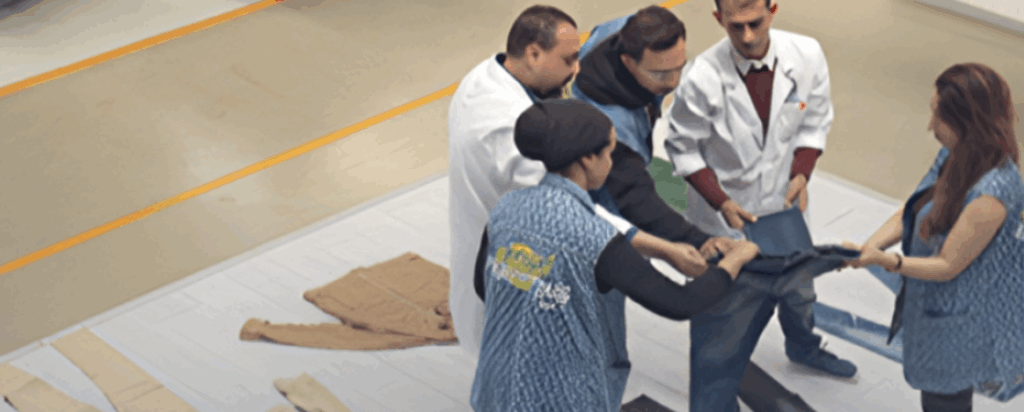
December 2025 | Nairobi, Kenya | UNEA7 COP16
Enabling the shift to sustainability and circularity in the textile value chain

February 2024 | Nairobi, Kenya | UNEA6
Connecting the threads: A coordinated policy response to transform the textile value chain and offer solutions which preserve nature

December 2024 | Riyadh, Saudi Arabia | UNCCD COP16
Fashion4Land: Uravelling the Environmental Impact of Fibres
Examples of national textile programmes and strategies
Africa
Uganda | National Textile Policy Document
Asia Pacific
Bangladesh | The Textile Act 2018
India (Gujarat) | Gujarat Textile Policy 2024
Pakistan | Textiles and Apparel Policy 2020-2025
Europe
Netherlands | Policy Programme for Circular Textile 2025-2030
Switzerland | Sustainable Textiles Switzerland 2030
Latin America & Caribbean
Chile | Circular Economy Strategy for Textiles by 2040 (Spanish) | Executive Summary (English).
UNEP resources
UNEP | 2025 | UNEP Toolbox for Policymakers from High Textile Consumption Countries
UNEP | 2025 | UNEP Toolbox for Policymakers from High Textile Production Countries
Partner resources
Ministry of Infrastructure and Water Management of the Netherlands | 2025 | Fast fashion undermines the circular textiles value chain
China Council for International Cooperation on Environment and Development | 2025 | Special Policy Report – Promote High-Quality Development with Circular Economy
Ellen MacArthur Foundation | 2024 | Pushing the boundaries of EPR policy for textiles

To engage in the policy dialogue on textiles, send an email to: [email protected]

This initiative is funded by the German Federal Ministry for Economic Cooperation and Development (BMZ) and supported by the Deutsche Gesellschaft für Internationale Zusammenarbeit (GIZ) GmbH.